Monday, December 8, 2014

Tomb of Salahuddin Ayyubi

Tomb of Salahuddin
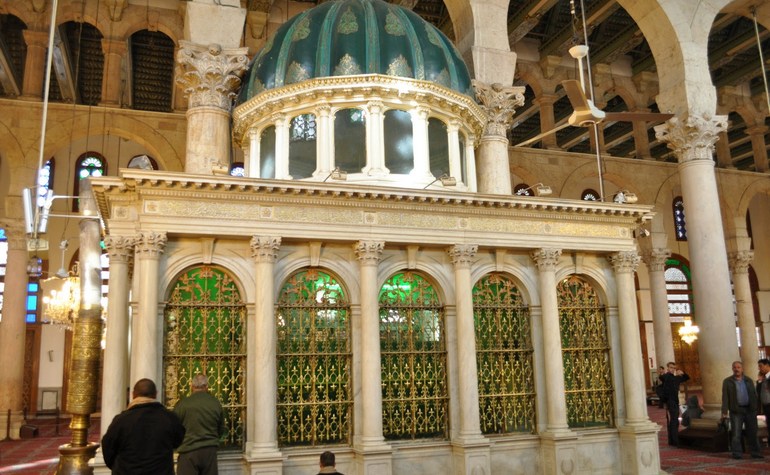
The Tomb of Salahuddin (right) – Photo: M Munzer Aragi (Panaramio)
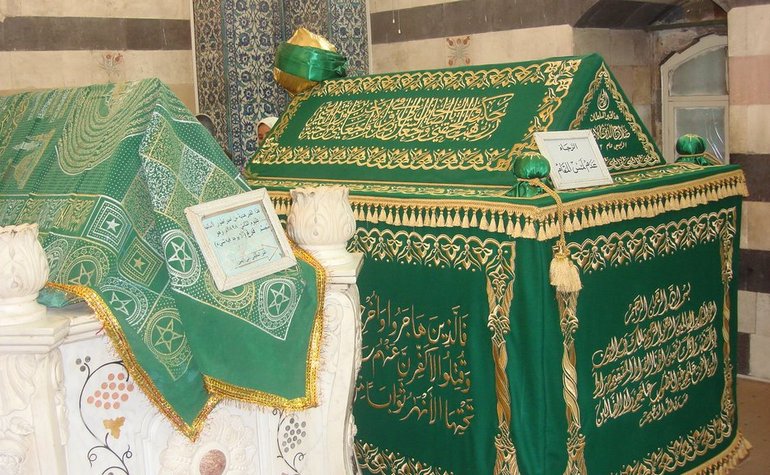
The green tomb on the right houses the grave of Salahuddin Ayyubi, the great general who repelled the Crusaders at the Horns of Hattin in northern Palestine and recaptured Jerusalem for the Muslims on 2nd October 1187 CE. On the left is an empty marble sarcophagus donated by Emperor Wilhelm II of Germany to the mausoleum.

  • Salahuddin Ayyubi’s real name was Yusuf ibn Ayyub, the title of Salahuddin which he was given due to his extraordinary qualities means ‘the Righteousness of the Faith’. He was born in Tikrit, in modern-day central Iraq, His family was of Kurdish background and ancestry, Between 1187 and 1189 CE Salahuddin Ayyubi took 50 Crusader castles and much of the Crusader kingdom. However, even his enemies thought him chivalrous and honourable. During the siege of Kerak castle he refused to bombard a tower in which a honeymoon couple were staying.
  • Baha ad-Din, one of Salahuddin’s officials wrote, “…Everyone who appeared before him was treated with honour, even an infidel … Once a Frankish prisoner was brought before him in whom the Sultan aroused such fear that the marks of terror and agitation were visible in his face. The interpreter asked him: ‘What are you afraid of?’ God inspired him to reply, ‘At first I was afraid of seeing that face, but after seeing it and standing in his presence, I am sure that I shall see only good in it.’ The Sultan was moved, pardoned him, and let him go free…”
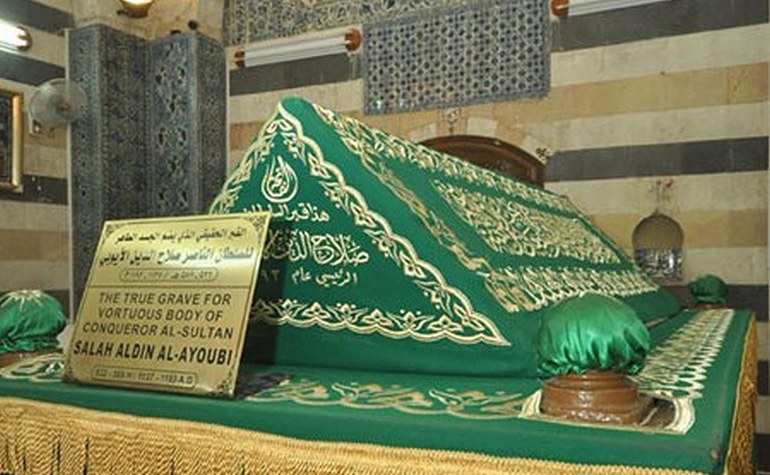
Tomb of Salahuddin inscription
The inscription on the Tomb of Salahuddin – Photo: beautyOfislam (Instagram)
  • He and Richard (the Lionheart) grew to respect one another as military leaders. When Salahuddin Ayyubi heard that Richard had fallen ill in Ascalon, he sent peaches and pears to help restore him to health. He also sent packs of snow from Mount Hermann to cool the King’s fever. At Arsuf, when Richard lost his horse, Salahuddin sent him two replacements. The Jewish philosopher Maimonides was one of Salahuddin Ayyubi’s personal physicians. When Jerusalem was recaptured, Salahuddin invited the Jews, who had been excluded by the Crusaders to come back, in particular the Jews of Ashkelon responded to his request. Salahuddin died of a fever on March 4, 1193, at Damascus, not long after Richard’s departure. Since Salahuddin had given most of his money away for charity, when they opened his treasury they found there was not enough money to pay for his funeral.

References:  Crusades – (Chris and Melanie Rice), A history of Jerusalem – Karen Armstrong, The Crusades – Christine Hatt, Wikipedia


Footprints of Allah's Messenger, Muhammad (Peace be upon him)

Picture 1
The Footprint of Allah's Messenger, Muhammad
(Peace be upon him) safely preserved in Topkapy
museum of Turkey

Picture 2
The footprint of Prophet Muhammad (Peace be
upon him).
Note: The authenticity of this footprint is not
known.

Sunday, December 7, 2014

12 FOODS THAT OUR BELOVED PROPHET MUHAMMAD ( صل الله عليه وسلم ) LIKED & THEIR BENEFITS.

1. Meat ( گوشت ):
Prophet Muhammad ( صل الله عليه وسلم )
said."Meat is the king of foods",
(sayed ut Tawam). It is rich in protein,
iron, zinc, selenium. Good for bones,
teeth, strengthening the immune
system, body tissues and many more.
2. Dates ( کهجور):
Dates are free from cholesterol and
contain very low fat. Dates are rich in
vitamins and minerals. Good source of
dietary fiber,tannins, vitamin-A, iron,
Potassium, calcium, mangnanese,
copper and pyridoxine (vitamin B-6)
3. Figs ( انجیر ):
Fig fruit is low in calories, Good for
bones
4. Grapes ( انگور):
The Prophet ( صل الله عليه وسلم ) was
very fond of grapes – it purifies the
blood, provides vigor and health,
strengthens the kidneys and clears the
bowels.
5. Honey ( شهد ):
Prophet Muhammad ( صل الله عليه وسلم )
said. "Honey is the cure of every
stomach disease". He use to drink
honey + water in morning. Considered
the best remedy for diarrhea when
mixed in hot water. It is the food of
foods, drink of drinks and drug of drugs.
It is used for creating appetite,
strengthening the stomach, eliminating
phlegm; as a meat preservative, hair
conditioner, eye soother and
mouthwash.
6. Melon ( تربوز-خربوزه ):
The Prophet ( صل الله عليه وسلم ) said:
‘None of your women who are
pregnant and eat of water melon will
fail to produce off spring that is good in
countenance
7. Milk:
The Prophet( صل الله عليه وسلم ) said
that milk wipes away heat from the
heart just as the finger wipes away
sweat from the brow. It strengthens the
back, improved the brain, renews vision
and drives away forgetfulness.
8. Olive & Olive Oil ( زیتون )
It is mentioned in Quran. Prophet
Muhammad ( صل الله عليه وسلم ) said "“
Eat the olive oil and apply it (locally),
since there is cure for seventy diseases
in it, one of them is Leprosy." Olive's are
said to be the food of Prophets. Olive oil
is Excellent treatment for skin and hair,
delays old age, and treats inflammation
of the stomach.
9. Pomegranate ( انار ):
The Prophet ( صل الله عليه وسلم ) said it
cleanses you of Satan and evil
aspirations for 40 days.
10. Vinegar ( سرکه ):
Prophet Muhammad ( صل الله عليه وسلم )
said. "Vinegar is the best curry
( "( ﻦﻟﺎﺳ
11. Water ( پانی ):
The Prophet ( صل الله عليه وسلم ) said
"fever is (like) vapor of hell. so cool
it with cold water" and "the best drink
in this world is water", when you are
thirsty drink it by sips and not gulps,
gulping produces sickness of the liver.
12. Squash or Pumpkin (كدّو):
It was Prophet Muhammad's( صل الله عليه وسلم) favorite vegetable. It is
good for Lungs, protects against birth
defects. Good in asthma, colon cancer,
pain, blood pressure, heart disease and
much more.
PLEASE SHARE. MAY BE THIS MESSAGE
WILL REACH TO SOME ONE WHO REALLY
NEEDS IT.

Grave of Muhammad (PBUH) - Photos

The black and white photo is Almost a century old picture of Mazar-e-
Mubarak (Grave) of Allah's Last Messenger,
Muhammad (Peace be upon him)

How to reply to Azaan

When Azaan goes on every muslim should answer, by doing this the much sawaab a person gets while saying Azaan, we also get same amount of sawaab. There is one hadees in which it is written that if people get to know the amount of sawaab they get while giving Azaan, there is going to be fight for it.

Give the answer to Azaan like this:

Azaan : Allahhu Akbar, Allahu akbar
Answer : Allahhu Akbar, Allahu akbar

Azaan : Allahhu Akbar, Allahu akbar
Answer: Allahhu Akbar, Allahu akbar

Azaan : Ash hadu al lailaha illallah
Answer: Ash hadu al lailaha illallah

Azaan : Ash hadu al lailaha illallah
Answer: Ash hadu al lailaha illallah

Azaan : Ash hadu anna Muhammadur rasulAllah
Answer: Ash hadu anna Muhammadur rasulAllah (sallallahu alyhiwasallam)

Azaan : Ash hadu anna Muhammadur rasulAllah
Answer: Ash hadu anna Muhammadur rasulAllah (sallallahu alyhiwasallam)

Azaan : Hayya alas salah
Answer: La hawla wala kuwwata illa billa hil aliyil azim

Azaan : Hayya alas salah
Answer: La hawla wala kuwwata illa billa hil aliyil azim

Azaan : Hayya alal falah
Answer: La hawla wala kuwwata illa billa hil aliyil azim

Azaan : Hayya alal falah
Answer: La hawla wala kuwwata illa billa hil aliyil azim

Azaan : Allahhu Akbar, Allahu akbar
Answer: Allahhu Akbar, Allahu akbar

Azaan : Lailaha Illallah
Answer: Lailaha Illallah

After this read dua of Azaan

After reading and acting on this please also share

Hazrat Mohammad (S.A.W.W) said:

1. The person who.is not silent while Azaan going on, he/she will not get chance to repeat kalmah while dying.

2. The one person who repeat Azaan gets 20 lakh reward points (nekiyan)
And
If they ask other person to repeat too they get 30 lakh reward points (nekiyan)

Until this message going to be forwarded u will also recieve the reward until that time :)

Saturday, December 6, 2014

Babari Masjid

21 years back on this December 6 the terrorists
(RSS) with the help of the hypocrites (Congress)
demolished Babari Masjid.
Now they are working to build a temple there.
My dear friends,pls pray always to rebuild the
Masjid there

Shrine of Yahya (upon him be peace)

Shrine of Yahya as
The Shrine inside the prayer hall of the Umayyad Mosque – Photo: londoncosmopolitan.blogspot.com


Legend has it that this small structure within the Umayyad Mosque houses the head of Yahya (upon him be peace) (John the Baptist). The head was supposedly found during excavations for the building of the mosque.
  • Yahya (upon him be peace) is mentioned by name 5 times in the Holy Quran. He is the only Prophet whose name was chosen for him exclusively by Allah (Glorified and Exalted is He).
  • The Prophet Zakariyyah (upon him be peace) used to go to the temple daily (the current al-Aqsa Sanctuary) to deliver his sermons even though he had grown feeble with age. He was not a rich man, but he was always ready to help those in need. His one disappointment in life was that he had no children, for his wife was barren. This worried him, for he feared there was no one after him to carry out his work. The people needed a strong leader, for it they were left on their own, they would move away from Allah’s teachings and change the Holy Laws to suit themselves.
  • During one of his visits to the temple, he went to check on Maryam (upon him be peace) [Mary], who was living in a secluded room of the temple. He was surprised to find fresh out of season fruit in her room. Besides him, no one had entry to her room. When he inquired, she told him that the fruit was from Allah which she found every morning. But why was he so surprised, she asked him. Did he not know that Allah provides without measure for whom He wills? This noble girl had opened his eyes to a startling idea. Could he not ask his Lord to bless him with a child in his old age? Even though his wife was past childbearing age, nothing was impossible for Allah (Glorified and Exalted is He).
  • Allah (Glorified and Exalted is He) revealed in the Holy Quran in Surah Maryam:
    “Kaf, Ha, Ya, Ain, Sad, (These letters are one of the miracles of the Quran, and none but Allah Alone knows their meanings). This is a mention of the Mercy of your Lord to His slave Zakariyyah. When he called out his Lord (Allah) – a call in secret, saying: “My Lord! Indeed my bones have grown feeble, and gray hair has spread on my head, and I have never been unblest in my invocation to You, O my Lord! And Verily! I fear my relatives after me, since my wife is barren. So give me from Yourself an heir, – who shall inherit me, and inherit also the posterity of Yaqoob [Jacob] (inheritance of the religious knowledge and Prophethood, not the wealth, etc.) And make him, my Lord, one with whom You are Well-pleased!“ 
  • Allah said: “O Zakariyyah! Verily, We give you the glad tidings of a son. His name will be Yahya (John). We have given that name to none before him.“ [19:1-7]
  • The name Yahya literally means ‘he lives’. Qatadah (may Allah show mercy on him) says this name was given to him because Allah had given him the inner life through Iman and Nubuwwah (i.e. belief and prophethood). Some say it was because Allah (Glorified and Exalted is He) brought people to life by guiding them through Yahya (upon him be peace). Yet others have said it was due to his mother’s womb being brought back to life after being barren until old age.
  • Yahya (upon him be peace) was born six months before Isa (upon him be peace). His mother was the sister of Hanna, who was the mother of Maryam (upon her be peace). When supplicating for a child Zakariyyah had specifically asked for a ‘pure child’ (Quran 3:38). According to his wishes, Allah (Glorified and Exalted is He) granted him an extraordinary son.
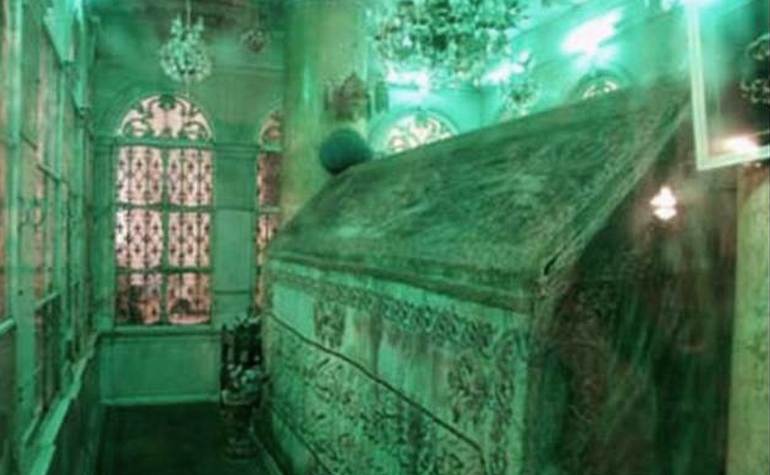
Interior of the tomb of Yahya as
A view of the interior of the tomb
  • In infancy, Yahya (upon him be peace) was instructed by Allah (Glorified and Exalted is He) to adhere and abide to the teachings of the Torah. He was also given the duty of propagating and communicating it to the people. Allah (Glorified and Exalted is He) granted him tremendous maturity and wisdom while he was still a child, and according to some historians, he was endowed with prophethood before the age of thirty.
  • Yahya (upon him be peace) preferred solitude to company. He ate leaves of trees and sometimes locusts or grasshoppers and drank the water of springs. He wept much from the fear of Allah and was the epitome of chastity, remaining unmarried throughout his life.
  • A conflict took place between Yahya (upon him be peace) and the authorities at that time. A tyrant king, Herod Antipas, the ruler of Palestine, was in love with Salome, his brother’s daughter. He was planning to marry his beautiful niece. The marriage was encouraged by her mother and by some of the learned men of Zion, either out of fear or to gain favour with the ruler. On hearing the ruler’s plan, Yahya (upon him be peace) pronounced that such a marriage would be incestuous. He would not approve it under any circumstance, as it was against the Law of the Torah.
  • Yahya (upon him be peace)’s pronouncement spread like wildfire. Salome was angry, for it was her ambition to rule the kingdom with her uncle. She plotted to achieve her aim. Dressing attractively, she sang and danced before her uncle, arousing Herod’s lust. Embracing her, he offered to fulfill whatever she desired. At once she told him: “I would love to have the head of Yahya, because he has defiled your honour and mine throughout the land. If you grant me this wish, I shall be very happy and will offer myself to you.” Bewitched by her charm, he submitted to her monstrous request. Yahya (upon him be peace) was executed and his head was brought to Salome. The cruel woman gloated with delight. But the death of Allah’s beloved prophet was avenged. Not only she, but all the children of Israel were severely punished by invading armies which destroyed their kingdom. According to Biblical sources, Yahya (upon him be peace) died in the year 36 CE aged 42.


References: Atlas of the Quran – Dr. Shauqi Abu Khalili, Stories of the Prophets – Ibn Kathir, HUMA Travel guide to Palestine.