Saturday, October 8, 2016

Ibn Battuta

Muslim Traveling Judge

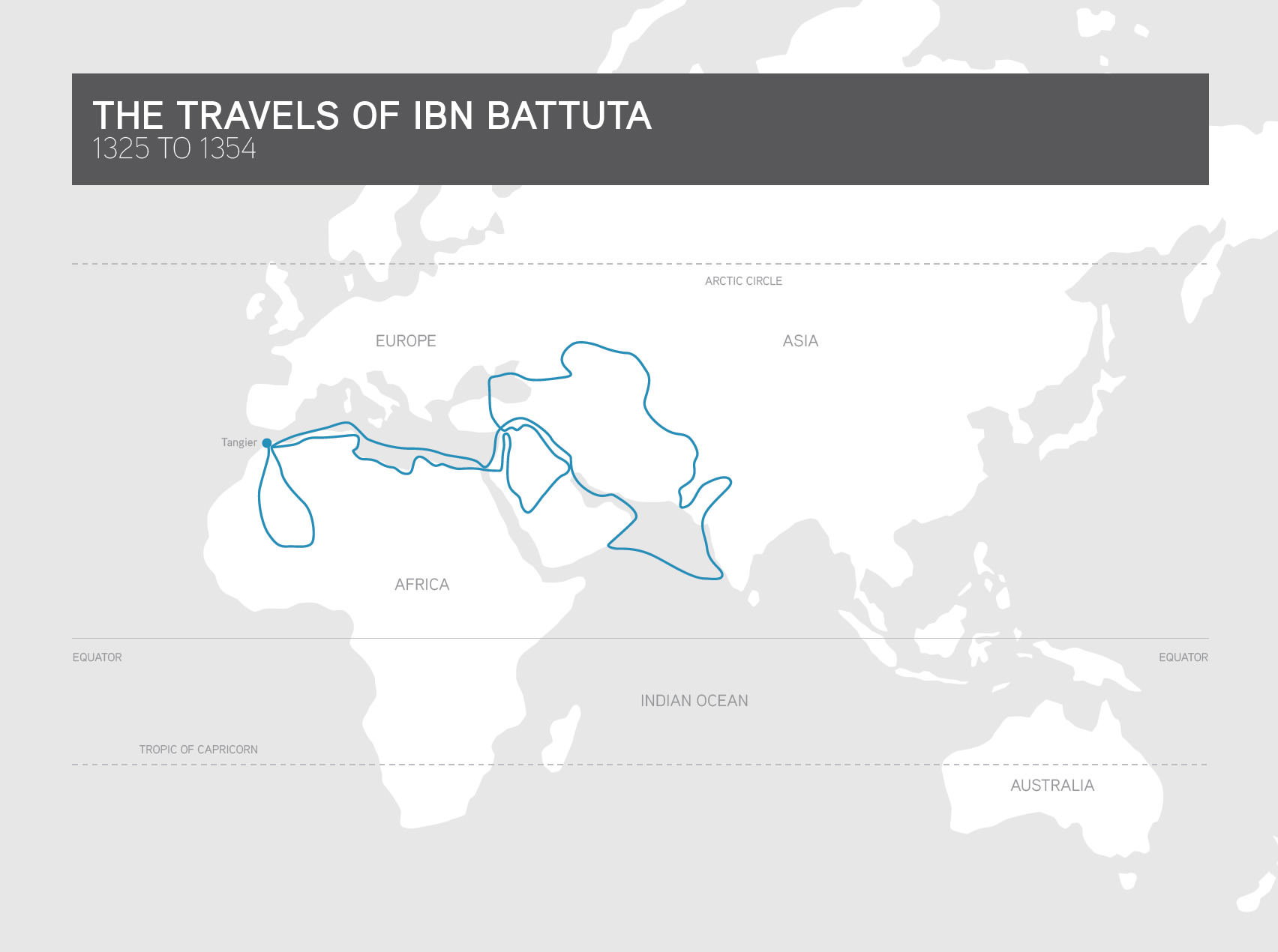
The account of the travels of the Muslim legal scholar Ibn Battuta in the first half of the 14th century reveals the wide scope of the Muslim world at that time.
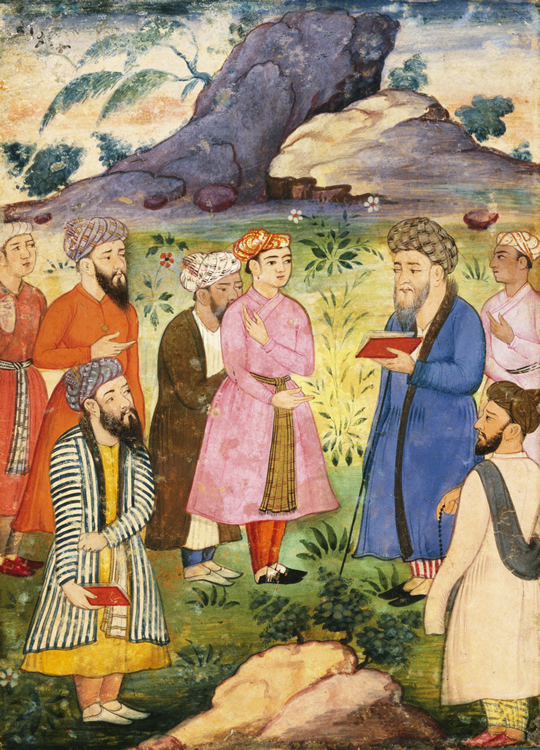
A 1605 painting of a young holy man © Stapleton Collection/CORBIS

The Abode of Islam

During the life of Ibn Battuta (sometimes spelled Battutah), Islamic civilization stretched from the Atlantic coast of West Africa across northern Africa, the Middle East, and India to Southeast Asia. This constituted the Dar al-Islam, or “Abode of Islam.” In addition, there were important communities of Muslims in cities and towns beyond the frontiers of Dar al-Islam. People in the whole “umma,” or community of people believing in one god and his sacred law (“shari’a”), shared doctrinal beliefs, religious rituals, moral values, and everyday manners. In the early 1300s this community was expanding dramatically.

Background

Ibn Battuta was born in Tangier, part of modern-day Morocco, on February 25, 1304. This port city on the coast of the Atlantic Ocean lies 45 miles west of the Mediterranean Sea, close to the western side of the Strait of Gibraltar — where Africa and Europe nearly collide.
The men in Ibn Battuta’s family were legal scholars and he was raised with a focus on education; however, there was no “madrasa,” or college of higher learning, in Tangier. Thus, Ibn Battuta’s urge to travel was spurred by interest in finding the best teachers and the best libraries, which were then in Alexandria, Cairo, and Damascus. He also wanted to make the pilgrimage to Mecca, called the “hajj,” as soon as possible, out of eagerness and devotion to his faith.
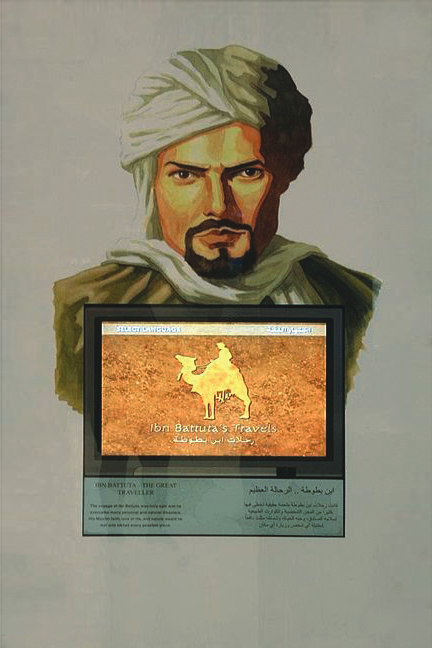
An interactive display at the Ibn Battuta Mall in Dubai, Dubai Construction Update, Imre Solt On June 14, 1325, at the age of 21, Ibn Battuta rode out of Tangier on a donkey, the start of his journey to Mecca. Unlike the young Marco Polo, he was quite alone, as illustrated by this passage from The Travels of Ibn Battuta, his detailed account of his wanderings:
I set out alone, having neither fellow-traveler in whose companionship I might find cheer, nor caravan whose party I might join, but swayed by an overmastering impulse within me and a desire long-cherished in my bosom to visit these illustrious sanctuaries. So I braced my resolution to quit all my dear ones, female and male, and forsook my home as birds forsake their nests. My parents being yet in the bonds of life, it weighed sorely upon me to part from them, and both they and I were afflicted with sorrow at this separation.
— from The Travels of Ibn Battutah

Travels

Ibn Battuta’s solitude did not last long, according to his chronicles. The governor of one city gave him alms of gold and woolen cloth, as almsgiving was considered a pillar of Islam. Ibn Battuta stayed at madrasas and at Sufi hospices as he made his way to Tunis. By the time he left Tunis he was serving as a paid judge, a qadi, of a caravan of pilgrims who needed their disputes settled by a well-educated man. Alexandria and Damascus were two highlights on the part of the trip that followed.
Ibn Battuta entered Mecca in mid-October 1326, a year and four months after leaving home. He stayed a month, taking part in all the ritual experiences and talking with diverse people from every Islamic land. While his writings don’t provide much detail about what this experience meant to him, after it was over he set out for Baghdad instead of returning home. He traveled in a camel caravan of returning pilgrims, and this is when his real globetrotting began.
Ibn Battuta led a complete life while traveling. He studied and prayed; he practiced his legal profession; he had astonishing outdoor adventures; he married at least 10 times and left children growing up all over Afro-Eurasia. A few examples of these activities provide a good picture of his life’s journey.
In Alexandria, Ibn Battuta spent three days as a guest of a locally venerated Sufi ascetic by the name of Burhan al-Din the Lame. This holy man saw that Ibn Battuta had a passion for travel. He suggested that Ibn Battuta visit three other fellow Sufis, two in India and one in China. Of the encounter with Buurhan al-Din, Ibn Battuta wrote in his Travels, “I was amazed at his [Burhan al-Din’s] prediction, and the idea of going to these countries having been cast into my mind, my wanderings never ceased until I had met these three that he named and conveyed his greeting to them.”
Ibn Battuta visited another saint who lived a quiet life of devotion in a town near Alexandria. It was summer and Ibn Battuta slept on the roof of the man’s cell. There he had a dream of a large bird that carried him far eastward and left him there. The saint interpreted this to mean that Ibn Battuta would travel to India and stay there for a long time, echoing what Burhan al-Din had said.
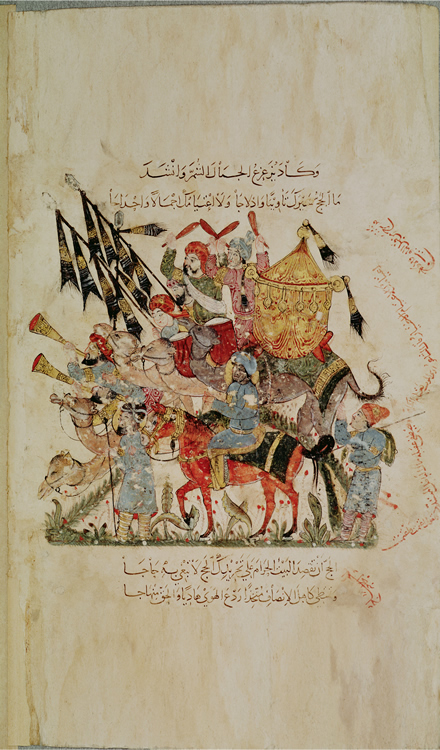
Caravan going to Mecca, from The Maqamat by Al-Hariri © The Gallery Collection/CORBISIn Damascus, Ibn Battuta boarded in one of the three madrasas. During his 24-day stay he settled down into some formal studies. Damascus had the largest concentration of famous theologians and jurists in the Arab-speaking world. They taught by reading and commenting on a classical book, then testing their students’ knowledge of it and issuing certificates to those who passed their tests.
Ibn Battuta then fulfilled the prophesies of the various seers he’d met by traveling to India via Afghanistan, where he had to cross the Hindu Kush Mountains at one of several high passes. His group crossed at the 13,000-foot (4,000-meter) Khawak Pass. “We crossed the mountains,” Ibn Battuta re-called in Travels, “setting out about the end of the night and traveling all day long until sunset. We kept spreading felt clothes in front of the camels for them to tread on, so that they would not sink in the snow.” Upon arriving in Delhi, Ibn Battuta sought an official career from the Muslim king of India, Muhammad Tughluq.
The king of India made a practice of appointing foreigners as ministers and judges. As Ibn Battuta traveled to the court in Delhi, 82 Hindu bandits attacked his group of 22; Ibn Battuta and his men drove them off, killing 13 of the thieves. King Tughluq appointed him judge of Delhi, but since Ibn Battuta did not speak Persian, the language of the court, two scholars were appointed to do the work of hearing cases. After eight years, Ibn Battuta was eager to escape the political intrigue. The king agreed to send him as an ambassador to China, and made him responsible for taking shiploads of goods to the Yuan emperor, in return for the emperor’s previous gifts of 100 slaves and cartloads of cloth and swords.
Ibn Battuta was set to sail from Calcutta with one large ship holding the goods for the Chinese emperor and a smaller ship filled with his personal entourage. Everything and everybody was loaded for departure, but Ibn Battuta spent the last day in the city attending Friday prayers. That evening a storm blew in, and the large ship with the presents ran aground and sank.
The smaller one, with Ibn Battuta’s servants, concubines, friends, and personal belongings, took to sea to escape the storm. Reduced to his prayer rug and the clothes on his back, Ibn Battuta could only hope to catch up with the ship carrying his group.
Thus Ibn Battuta’s travels continued, with narrow escapes and dramatically varying fortunes. Eventually he learned that his ship had been seized by a non-Muslim ruler in Sumatra. He decided to go to China anyway, but stopped on the way at the Maldives, an island group 400 miles southwest off the coast of India.
In the Maldives, Ibn Battuta enjoyed the company of women even more than usual. Usually, he married one at a time and divorced her when he left on further travels. He often had concubines, too, purchased or given as gifts. In the Maldives he married four women on one island, the legal limit under Muslim law. As he wrote in his Travels:
It is easy to marry in these islands because of the smallness of the dowries and the pleasures of society which the women offer... When the ships put in, the crew marry; when they intend to leave they divorce their wives. This is a kind of temporary marriage. The women of these islands never leave their country.
From there, Ibn Battuta continued on to China. Battuta’s narrative about China occupies less than 6 percent of his whole story. It is so sketchy and confusing that some scholars doubt that he even went to China and believe he merely fabricated this part of his account. He claims to have gone as far north as Beijing, but his description of that is even vaguer than the rest, so perhaps he only got as far north as Zaitun, now Quanzhou. In any case, he admits in the Travels that in China he was unable to understand or accept much of what he saw; it was not part of his familiar Dar al-Islam:
China was beautiful, but it did not please me. On the contrary, I was greatly troubled thinking about the way paganism dominated this country. Whenever I went out of my lodging, I saw many blameworthy things. That disturbed me so much that I stayed indoors most of the time and only went out when necessary. During my stay in China, whenever I saw any Muslims I always felt as though I were meeting my own family and close kinsmen. 
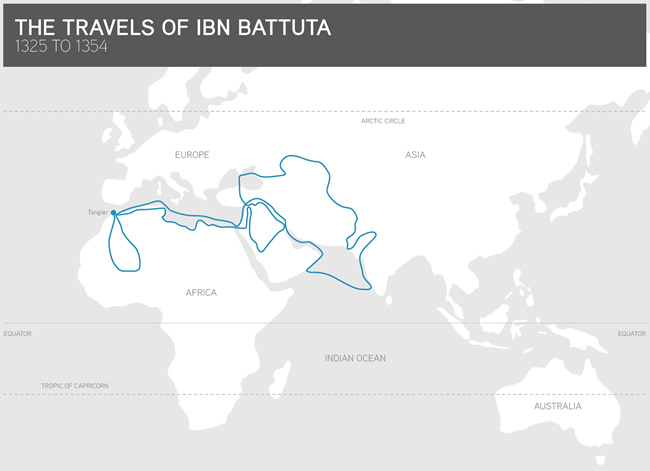
The travels of Ibn  Battuta. Click here for a larger version. Download PDF.His writing and his last years

Ibn Battuta returned home in 1349 to Tangier, where he visited the grave of his mother, who had been carried off by the Black Death (plague) only a few months before his return. (During his return, he learned in Damascus that his father had died 15 years earlier.) Ibn Battuta stayed in Tangier only a few days before leaving to visit North Africa, Spain, and West Africa (Mali).
He returned from that trip in 1354 to Fez, Morocco, where the local sultan commissioned a young literary scholar to record Ibn Battuta’s experiences. The scholar had to compose the whole story into literary form, using a type of Arabic literature called a rihla, indicating a journey in search of divine knowledge. The two men collaborated for two years, with Ibn Battuta telling his story and drafting notes about it. Ibn Battuta possessed an extraordinary memory, but he also misremembered some facts and dates.
All we know about Ibn Battuta’s life after the writing of his book is that he held the office of judge in some town or other. Since he was not yet 50 when he stopped traveling, he is thought to have married again and to have had more children. He died in 1368 or 1369; the place of his death is not known, nor the location of his grave.

The legacy of Ibn Battuta’s Travels

Unlike the impact of the Travels of Marco Polo on the European world, the account of Battuta’s travels had only modest impact on the Muslim world before the 19th century. While copies circulated earlier, it was French and English scholars who eventually brought The Travels of Ibn Battuta the international attention it deserved.
How does Ibn Battuta’s account compare with that of Marco Polo’s? Each traveler lived by his wits — they had that in common. Each took joy in dis- covering new experiences, and each exercised amazing perseverance and fortitude to complete extensive travels and return to their home country.
Yet there were many differences. Ibn Battuta was an educated, cosmopolitan, gregarious, upper-class man who traveled within a familiar Muslim culture, meeting like-minded people wherever he went. Polo was a merchant, not formally educated, who traveled to strange, unfamiliar cultures, where he learned new ways of dressing, speaking, and behaving. Ibn Battuta told more about himself, the people he met, and the importance of the positions he held. Marco Polo, on the other had, focused on reporting accurate information about what he had observed. How fortunate we are to have accounts from two contrasting intercontinental travelers from more than 600 years ago.
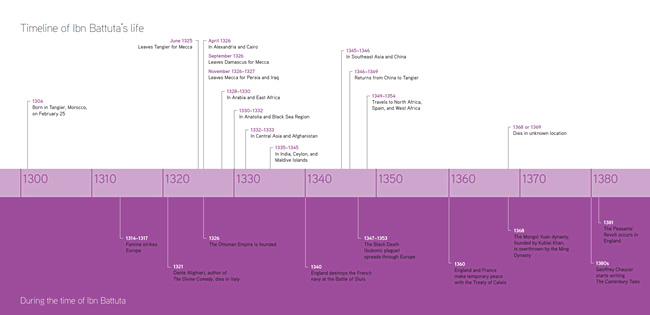
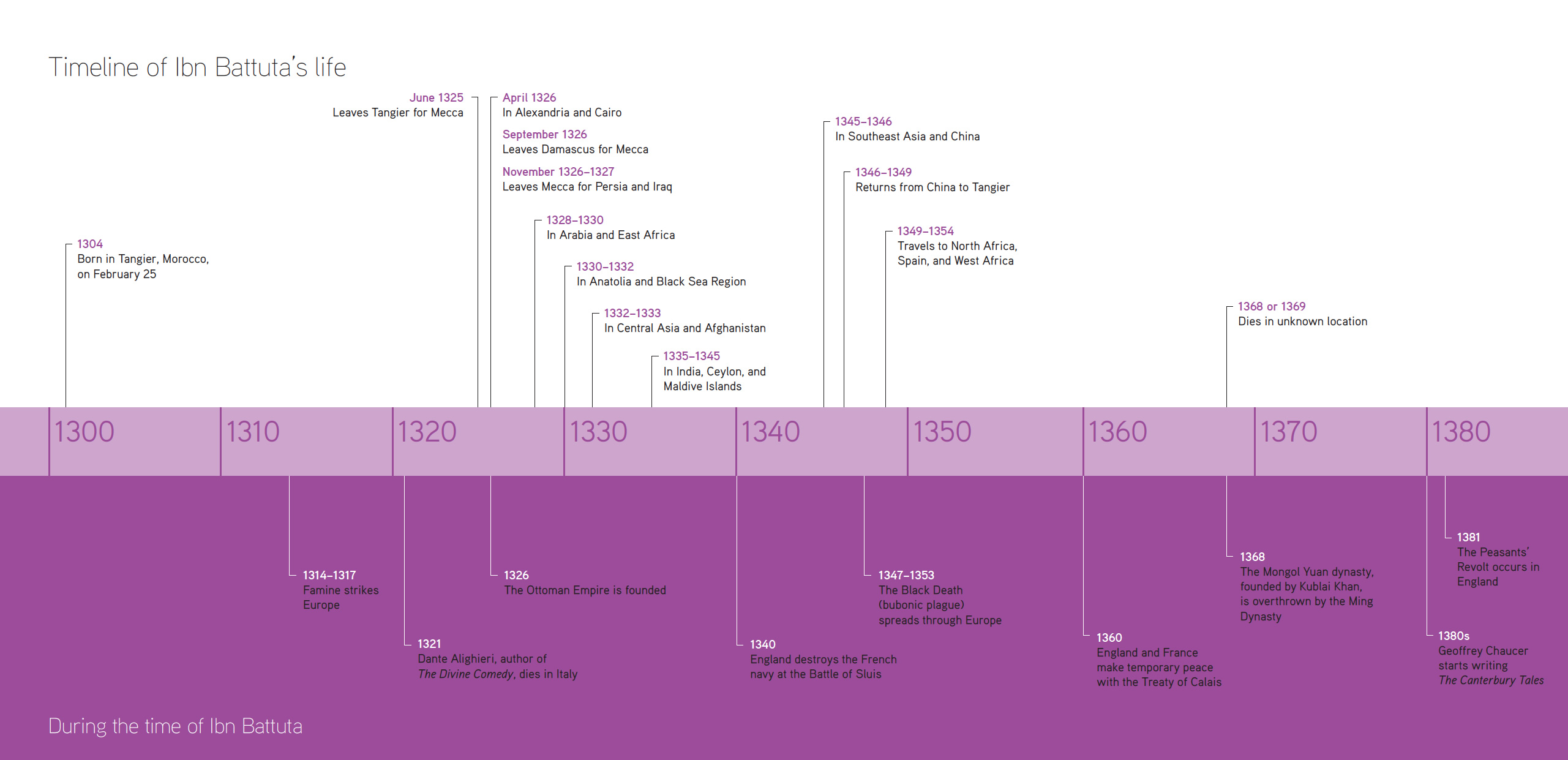
Timeline of Battuta’s life. Click here for a larger version. Download PDF. ​By Cynthia Stokes Brown

For Further Discussion

How did Islam provide a comfortable environment for Ibn Battuta to travel in? Share your answers in the Questions Area below.

Sources

 https://www.khanacademy.org/partner-content/big-history-project/expansion-interconnection/exploration-interconnection/a/ibn-battuta

Arno, Joan and Helen Grady. Ibn Battuta: A View of the Fourteenth-Century World. Los Angeles: National Center for History in the Schools, University of California, Los Angeles, 1998.
Battuta, Ibn. The Travels of Ibn Battutah, abridged and annotated. Edited by Tim Mackinstosh-Smith. London: Picador, 2002.
Dunn, Ross E. The Adventures of Ibn Battuta: A Muslim Traveler of the 14th Century. Berkeley, CA: University of California Press, 2005.
Waines, David. The Odyssey of Ibn Battuta: Uncommon Tales of a Medieval Adventurer. Chicago: University of Chicago Press, 2010.

Thursday, October 6, 2016

Why Muslims fast on Ashura (10th of Muharram)?

عَنِ ابْنِ عَبَّاسٍ، - رضى الله عنهما - أَنَّ رَسُولَ اللَّهِ صلى الله عليه وسلم قَدِمَ الْمَدِينَةَ فَوَجَدَ الْيَهُودَ صِيَامًا يَوْمَ عَاشُورَاءَ فَقَالَ لَهُمْ رَسُولُ اللَّهِ صلى الله عليه وسلم " مَا هَذَا الْيَوْمُ الَّذِي تَصُومُونَهُ " . فَقَالُوا هَذَا يَوْمٌ عَظِيمٌ أَنْجَى اللَّهُ فِيهِ مُوسَى وَقَوْمَهُ وَغَرَّقَ فِرْعَوْنَ وَقَوْمَهُ فَصَامَهُ مُوسَى شُكْرًا فَنَحْنُ نَصُومُهُ . فَقَالَ رَسُولُ اللَّهِ صلى الله عليه وسلم " فَنَحْنُ أَحَقُّ وَأَوْلَى بِمُوسَى مِنْكُمْ " . فَصَامَهُ رَسُولُ اللَّهِ صلى الله عليه وسلم وَأَمَرَ بِصِيَامِهِ

Ibn'Abbas (Allah be pleased with both of them) reported that the Messenger of Allah ﷺ arrived in Madinah and found the Jews observing fast on the day of 'Ashura (10th of Muharram). The Messenger of Allah ﷺ said to them: What is the (significance) of this day that you observe fast on it? They said: It is the day of great (significance) when Allah delivered Moses and his people, and drowned the Pharaoh and his people, and Moses observed fast out of gratitude and we also observe it. Upon this the Messenger of Allah ﷺ said: We have more right, and we have a closer connection with Moses than you have; so Allah's Messenger ﷺ observed fast (on the day of 'Ashura), and gave orders that it should be observed.

حضرت ابن عباس رضی اللہ تعالیٰ عنہما سے روایت ہے کہ رسول اللہ صلی اللہ علیہ وآلہ وسلم جب مدینہ منورہ تشریف لائے تو آپ نے یہودیوں کو عاشورہ کے دن روزہ رکھتے ہوئے پایا تو رسول اللہ صلی اللہ علیہ وآلہ وسلم نے ان سے فرمایا کہ اس دن کی کیا وجہ ہے؟ تو وہ کہنے لگے کہ یہ وہ عظیم دن ہے کہ جس میں اللہ تعالیٰ نے موسیٰ علیہ السلام اور ان کی قوم کو نجات عطا فرمائی اور فرعون اور اس کی قوم کو غرق فرمایا چنانچہ حضرت موسیٰ علیہ السلام نے شکرانے کا روزہ رکھا اس لئے ہم بھی روزہ رکھتے ہیں تو رسول اللہ صلی اللہ علیہ وآلہ وسلم نے فرمایا کہ ہم زیادہ حقدار ہیں اور تم سے زیادہ موسیٰ علیہ السلام کے قریب ہیں تو رسول اللہ صلی اللہ علیہ وآلہ وسلم نے بھی عاشورہ کے دن روزہ رکھا اور اپنے صحابہ رضی اللہ تعالیٰ عنہم کو بھی روزہ رکھنے کا حکم فرمایا۔

[Sahih Muslim, Book of Fasting, Hadith: 2656]

Tuesday, October 4, 2016

Feed Refugee Children By Downloading ShareTheMeal

There are around 795 million undernourished people in the world today. With the Refugee crisis rising rapidly, more and more people are being added to this number and different actions are being taken to accommodate the entry of these refugees into neighboring countries. Hunger and malnutrition are the number one risk to health worldwide — greater than AIDS, malaria and tuberculosis combined. There are around 1,400 children who have found refuge in Beirut, Lebanon. How do these children eat? The World Food Programme (WFP), based in Berlin, has launched a new app to help deal with this situation. ShareTheMeal enables people to “share their meals” with children in need. It costs US$ 0.50 to feed one child for a day.
The app is all about fighting world hunger by targeting Refugee camps like those in Jordan and Lebanon. Ever since its initial launch in November, almost six million meals have been donated by some 500,000 users.
This app costs only 50 cents to download, and these 50 cents will feed a child for an entire day! You can then donate whenever you want, with the push of a button. The app even provides you with a picture of which child that YOU fed that day, along with their story.
ShareTheMeal-1
It seems unlikely that such a small amount of money can feed a child for a day, right? The WFP actually turns the money into vouchers, much like ‘e-cards’ in which the recipients can use in local shops found in Beirut. For many, $0.50 is basically nothing. So why not donate it to someone to whom it means complete survival?
You can download The ShareTheMeal app from Google  here or Apple here, and donate as much as you like. The WFP team would love to hear from you, so for more information you can email them at support@sharethemeal.org.

source  http://www.barakabits.com/2016/07/sharethemeal-helps-feed-children-in-need-for-only-0-50

Hijama: Cure for the Mind, Body and Soul

“I did not pass by any group of angels on the night of Al-Isra, unless they said to me, O Muhammad (SAW), tell your Ummah to do Hijama ”
(Narrated by At-Tirmidhi and Ibn Majah)
‘ Hijama ‘ is the Arabic for an ancient method of healing known in English as Wet Cupping or bloodletting. It is a therapeutic process that involves creating negative pressure against the skin by means of vacuum (induced manually, electrically or by fire) using any of the various vessels such as horns, glass jars, bamboo cups or more recently disposable plastic cups. It then involves superficial scratches on the skin to help release pathogens, toxins and the ‘excess’, rendering this therapy the best and fastest detox known to man! It is also a very effective therapy in promoting blood circulation, boosting immunity, rebalancing body hormones and energy, making it the best therapy for general health and well-being for those individuals who wish to have Hijama performed as a preventive measure but also as a treatment and cure for tens of ailments from body aches and pains including sports injuries all the way to cholesterol, diabetes, blood pressure, headaches and migraines, asthma, anaemia, menstrual problems and infertility, sexual problems, skin conditions, psychological disorders including stress, depression, anxiety and insomnia…etc. Hijama is noticeably effective for the treatment of metaphysical and spiritual conditions such as Evil Eye, Black Magic and Jinn possession or for those conditions that medical practise can not account for.
Hijama Therapy is a safe procedure if performed correctly, and unlike drugs and pharmaceutical medications, Hijama has no side effects and does not inject substances in the body or prescribe internalising anything. It in fact releases toxic build-up out of the system as opposed to increasing chemical and toxic accumulation.
History of Cupping Therapy:
Cupping was widespread throughout the whole of Europe (including the UK), Asia and more so in the Islamic societies where this ancient prophetic practice was and still is an acceptable practice used as a remedy and supported by religious beliefs.
The Ancient Egyptians, Greeks as well as the Chinese used this therapy. An indication of the long history of cupping is evident as the, Ebers Papyrus, recognised as the oldest medical textbook written in approximately 1550 BCE in Egypt mentions the art of cupping (Curtis, 2005).
Cupping was also practiced by famous Arab physicians as Al-Razi (865-925) and Ibn Sina or best known to the west as Avicenna (980-1037).
It’s worth mentioning that in mainly rural Bangladesh a similar practice by the name of ‘Shinga’ has been practised by particular individuals. Many Muslims in Bangladesh seem to associate it with witchcraft and other possibly unislamic practises, which discourages many Muslims from having the therapy done. It must be highlighted that this does not detract from the fact that if done correctly and by the right practitioner in the right context, it is an effective method of healing and after all an authentic Sunnah of the prophet (SAW).
In the West, cupping remained an important part of medicine and therapy, both- conventional / alternative, and folk-based, until the early 20th century. The surgeon Charles Kennedy wrote, in 1826:
“The art of cupping has been so well-known, and the benefits arising from it so long experienced, that it is quite unnecessary to bring forward testimonials in favour of what has received not only the approbation of modern times, but also the sanction of remotest antiquity.”
Today Cupping therapy is enjoying resurgence in popularity as more and more people learn about it and experience its healing power for themselves. This therapy is drawing interest from celebrities like Oscar winning actress Gwyneth Paltrow who had cupping done. As a result and on 9th July 2005 this therapy enjoyed a worldwide coverage by all types of media fuelling discussions on the subject and in fact participating greatly in its resurgence!
Today there are a multitude of centres around the world offering dry/wet cupping therapy, spanning from Malaysia, Middle East, Turkey and an upsurge of companies and practitioners offering the therapy in the United kingdom.
Hijama in Islamic Practice
The Prophet Muhammed (SAW) advised cupping in over 28 holy instructions, and urged the people to use it. It is beyond the scope of this article to elaborate on all those narrations but we have selected a few that emphasise the importance of this beneficial practice.
Alongside the Hadith at the start of the article, the following are some essential information from the Prophetic tradition about Hijama.
The Prophet (SAW) said: “If there is anything good in the medicines with which you treat yourselves, it is in the incision of the Hijama therapist, or a drink of honey or cauterization with fire, but I do not like to be cauterized.” (Narrated by Muslim)
The Prophet of Allah (SWT) used cupping on his honourable head for migraine (Al-Bukhari), on his honourable hip joint (Abu Dawud) and back of the neck (Kahill) lateral sides of the neck and between shoulders (Abu Dawud, At-Tirmidhi and Ibn Majah) and said that “cupping on the back of the neck [elkamahdowa] treats 72 illnesses! (At Tabarani).
Ibn Al-Qayyum mentions that the Messenger (SAW) was afflicted with black magic and was cupped on the head to treat it. He also highlights that Hijama is one of the best cures to treat black magic if performed correctly (Zaad al Ma’aad)
Islamic research as well as medical research in this area is highly recommended for health conscious Muslims and students of knowledge, as this constitutes a huge Dawa potential, let alone the potential health benefits for mankind! Remember that the Prophet (SAW) said: “the Strong believer is better and more beloved to Allah (SWT) than the weak one”! Also it is imperative for Muslim preachers to revive this much forgotten Sunnah and effective method of healing by having it done themselves first and by raising awareness about it amongst the masses. Thus far, there is little coverage of this important subject in Islamic discourse and consequently little practice.
On a final note, we must always remember that Shifaa comes from Allah (SWT) alone and to implement and revive the practice of His beloved Rasool (SAW) will no doubt bring about His blessings and hopefully cure insha’Allah (SWT).
Cupping, the technique, is very useful and very safe and can be easily incorporated into your family health practices.
By: Abdul-Karim Qatifan
Director of Hijama Health Clinic and Hijama Therapist.

Source islamiquemagazine.com/hijama-cure-for-the-mind-body-and-soul/

Monday, October 3, 2016

Prophet Muhammad (PBUH): 9 Healthy Habits That Science Later Proved

In honor of the prophet’s birthday, we decided to share with you some of Muhammad’s (PBUH) healthy habits, which happen to be backed scientifically today!
Early Riser: Prophet Muhammad slept early and woke up with the Adhan of Fajr each day. Being an early riser has scientifically been correlated with better productivity, as well as better mental health in general. So, waking up early may be hard but with baby steps, even if it’s just waking up 15 minutes earlier to start with, you can begin improving your quality of life.
 
Eating Less: The practice of eating less to prevent sickness and disease was emphasized by Prophet Muhammad (PBUH), and now backed heavily by science much later. The Islamic concept ‘1/3 for your food, 1/3 for your liquids, and 1/3 for your breath’ matches very closely to the Japanese ‘hara hachi bu’ concept, which means eat until you are only 80% full. Read more about the health benefits of the ‘hara hachi bu’ practice here.
Eating Slowly: We now know that it takes our body 20 minutes to send signals to our brain that it is full. Slow eating will help you eat less food and improve your digestion, and it is a practice Muhammad (PBUH) did himself and strongly advocated. Read more about slow, mindful eating here.
Mindful Eating: ‘Eat together and not separately, for the blessing is associated with the company’. The prophet stressed this, and today sharing and enjoying food has been proven to reduce stress, improve family and romantic relationships, and build healthy eating habits within children.
Water: ‘Do not drink water in one breath, but drink it in two or three breaths’, is the manner by which Muhammad (PBUH) drank water. Science today proves that when a person drinks too much water in a short period of time they can experience headaches, imbalance in blood electrolyte levels and sometimes dizziness too. Drinking slowly helps you actually absorb the fluid and get the most benefit out of it.
 
Pomegranates: Pomegranates are thought to have been the prophet’s favorite fruit, and modern scientific research has proven pomegranates to be one of the healthiest foods on the planet. They contain manganese, which helps in the formation of bone structures during the metabolic process, and potassium, which aids in maintaining cellular function and keeps a balance in fluid levels. They are also potent in flavonoids and polyphenols, antioxidants which protect our bodies against heart disease.
 
Fasting: Recent evidence is showing that not just the food we eat, but our eating timings and patterns also have a profound impact on our health. Fasting was a regular practice of Muhammad’s (PBUH) life, not just during Ramadan. He would fast until Maghrib every Monday and Thursday, and also on the 13th, 14th and 15th of each month. This is similar to the intermittent fasting practice, which has been proven to balance hormone levels, prevent oxidative stress, and reduce overall inflammation. When you think about it, the less food you put into your body the less it focuses on digestion and the more it can focus on healing itself from certain ailments!
Dates: Dates are the perfect foods to break your fast as they stabilize your blood sugar levels, rebalance blood electrolyte levels, and help kick start your digestive system in preparation for food. Prophet Muhammad (PBUH) also recommended dates to be eaten in the lead up to childbirth. Dates are now proven to boost oxytocin production in your body and speed up labor.
 
 
Staying Active: Fulfilling three of the five pillars of Islam requires that Muslims be of sound health and fitness; prayer in itself is a form of exercise that requires movement of your body’s muscles and joints. Good health is also necessary if you intend to fast or participate in Hajj. Prophet Muhammad (PBUH) strongly encouraged physical exercise and told parents to encourage physical activity in their children too by ‘teaching them swimming, horse riding, and archery’.


source https://jacktheladhub.com/2015/12/28/prophet-muhammad-pbuh-9-healthy-habits-that-science-later-proved/

Sunday, October 2, 2016

Weaving a Home Tent Created for Refugees by Jordanian Designer


tent-refugees

People have roamed the Earth since the beginning of time. The reasons for travel vary from war, weather, or even the hunt for food. The last few years have seen a surge of nomadic movements in the form of refugees fleeing war-torn countries. So what’s the first thing a traveler would need? Shelter, to be more specific a tent. Jordanian-Canadian Abeer Seikaly, a crucial asset to the “Weaving a Home” Project, has designed a tent that provides more than just shelter.
With the refugees in mind, her tent merges different combinations from nature into a very awesome tent! The project was a winning entry in the 2013 Lexus Design Awards. The fabric looks woven together, much like the traditional forms of embroidery. It looks very much like the scales of a snake, too!

The tent itself does more than just protect. It is designed to keep the cold air out during the winter, but bring it in during the summer. The top of the tent collects rainwater that spirals down through internal pipes in which people could then bring back up for a shower.
tent-refugees-2
The tent’s fabric even has strong thermal properties that can convert solar radiation into power for lighting and heat collected water for showering. It’s designed to fold up neatly for travel, making it the invention that could save thousands of lives.
tent-refugees
Abeer says on her website:
“This lightweight, mobile, structural fabric could potentially close the gap between need and desire as people metaphorically weave their lives back together, physically weaving their built environment into a place both new and familiar, transient and rooted, private and connected. In this space, the refugees find a place to pause from their turbulent worlds, a place to weave the tapestry of their new lives. They weave their shelter into home.”
In addition to her independent practice, Abeer is also the production manager of Adel Abidin, the internationally recognized Iraqi-Finnish video artist.
The Weaving a Home project is still under development and hopefully, it soon will be available for all refugees.

source http://www.barakabits.com/2016/08/weaving-a-home-tent-created-for-refugees

Saturday, October 1, 2016

This happens to your body when you eat 3 dates per day. I had no idea.

Dates are often underestimated or only seen as a sweet. But there are many good reasons to regularly eat the sweet fruit. Here are a few of them:
1. Free your arteries
The high potassium content will not only help your heart but also curb atherosclerosis. This vascular disease is due to calcium deposited on the vessel walls. This not only narrows the arteries, but also carries the risk in the form of potential blockages. This increases the risk of strokes, heart attacks and other diseases enormously. Eating three dates each day will make a big difference and help keep your vessels clear.
2. Support for your liver
Studies have shown that dates can also help contain liver cirrhosis.  This painful condition occurs when the liver can not properly deal with toxins and produces too much collagen. Dates support your liver to overcome the daily requirements.
 
3. For a healthy heart
Dates are fantastic for your heart. Because the fruit contains a lot of potassium, they are perfectly suited to counteract cardiovascular diseases. At the same time, they can reduce LDL-cholesterol - which is a risk factor for stroke and heart attacks.
 
4. Eagle eyes
There is a lot of vitamin A in dates. This vitamin helps your cornea regenerate and protects the eyes. They also contain lutein and zeaxanthin, which are both nutrients that allow your eyes to better filter out harmful UV-rays. This means that your eyes remain "fresh" longer and better maintain their capacity.
 
5. More energy
Together with a few nuts or almonds, dates are the ideal afternoon snack. The sugar content in dates gives you an energy boost that lasts longer through the fat from the nuts and makes us feel full. Simultaneously, brain activity is stimulated, so you get a clearer head from the vitamins. Of course, they are a great sports nutrition.
 
6. Better digestion
Many people already know, but dates aide with digestion. They help against constipation, stomach aches and many other complaints. Through their "cleansing" effect, they are fantastic as a precaution against intestinal cancer. All these features can be explained by the fiber and amino acid content. They help to optimize your digestion and help your body better absorb nutrients.
 
7. Dates as pain relief
Hard to believe but true: the magnesium in dates helps to reduce pain and swelling. It also has antibacterial properties and reduces infections in the body. In any case, they are a brilliant supplement to medicinal methods. 
 
It's incredible just how much dates can help with. A great reason to enjoy them more often as a snack. 
 
source http://www.hefty.co/3-dates-per-day/